Achieve Clearance
Safely regain your view or clear branches away from roofs and powerlines.
Looking to reduce the height of an overgrown tree? Discover the safer, council-approved alternative to traditional Tree Lopping in Kalorama.
Serving Kalorama and the Dandenong Ranges with smarter tree care.
We provide the results you want from lopping—clearance, light, and safety—using proper arboricultural methods.
Many Kalorama residents request lopping because they fear large mountain ash falling. We can assess the tree's actual risk and provide a targeted solution, whether that is weight reduction or total removal.
Safely regain your view or clear branches away from roofs and powerlines.
Ensure your tree work complies with the Yarra Ranges Planning Scheme overlays.
Avoid the weak, hazardous regrowth that inevitably follows traditional lopping.
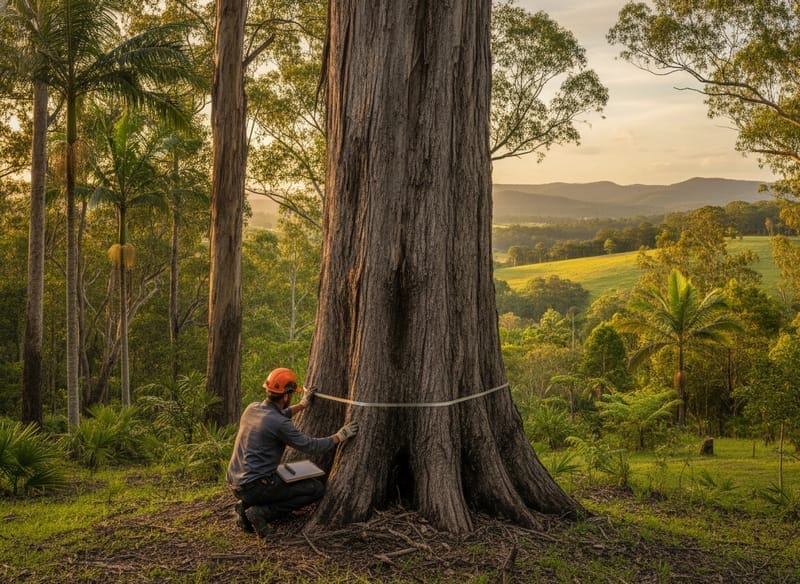
We visit your property to understand what you want to achieve with the tree.
We explain the best AS4373-compliant method to achieve your goal, whether pruning or removal.
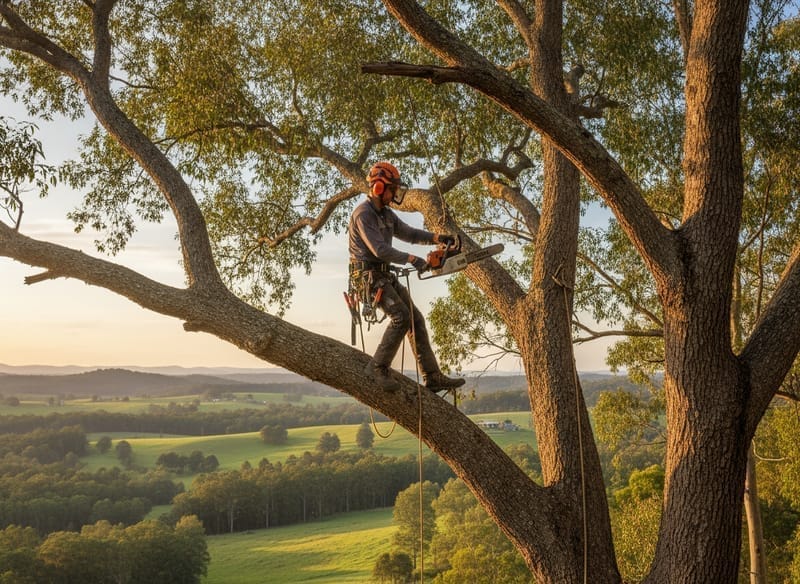
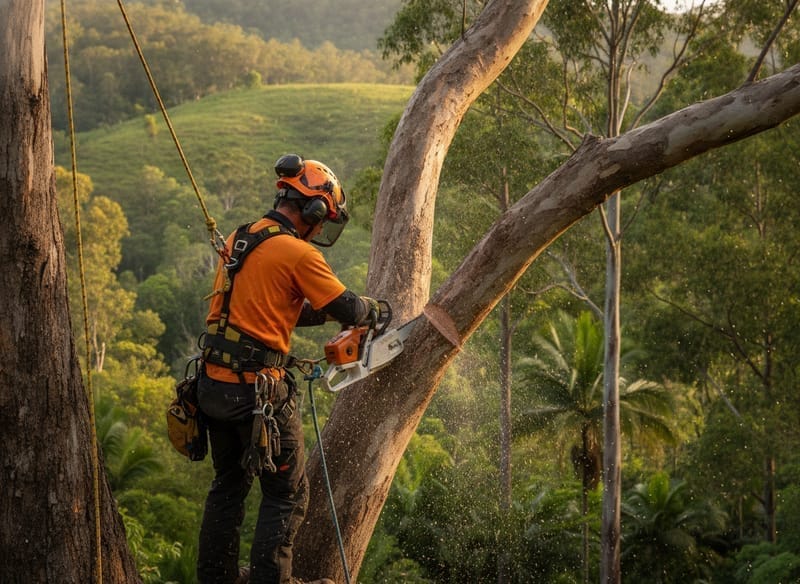
Our climbers execute the reduction using proper cuts at lateral junctions.
All foliage and timber are chipped and removed from your site.
Living in the Dandenong Ranges means sharing your property with some of Victoria's most spectacular timber. But when a towering Mountain Ash or Monterey Cypress starts looming too close to your roofline, you need expert intervention. If you are looking for professional Tree Lopping Kalorama, our team of qualified arborists is here to help. We understand that when locals ask for tree lopping, they usually want to reduce a tree's height, clear overhanging branches from their gutters, or manage a heavy canopy before the winter storm season hits.
However, on our steep hinterland blocks, crude hacking or "topping" a tree is the worst thing you can do. It creates weak, dangerous regrowth that is highly susceptible to the intense cold front winds we get along the ridge. Instead, we use targeted, Australian Standard-compliant pruning techniques to achieve the size reduction and clearance you need, while keeping the tree structurally sound and visually appealing. Whether you are managing fire risk or just trying to get some winter sun into your Kalorama garden, our climbers and trucks are equipped for the job.
It is tempting to take a chainsaw to a nuisance branch, but DIY tree lopping often leads to disaster, especially with the sheer size of the trees in our region. When a tree is crudely "lopped" or topped—meaning branches are chopped mid-limb without regard for the branch collar—the tree's natural defence mechanisms are destroyed. This forces the tree to push out rapid, weakly attached shoots known as epicormic growth. In the Dandenong Ranges, where wet soils and fierce spring winds regularly test root systems, this weak regrowth becomes a major hazard. A poorly lopped Messmate Stringybark or Mountain Grey Gum will often shed these new, heavy limbs onto roofs, powerlines, or driveways during the next severe weather event. Furthermore, leaving massive stubs invites fungal decay, hollowing out the tree from the inside and turning a healthy specimen into a ticking time bomb. The solution is professional arboriculture. Rather than indiscriminately hacking branches, our team follows AS4373 (Pruning of Amenity Trees). We use target pruning and precise branch collar cuts to reduce canopy size, lift low-hanging limbs, or thin out dense foliage. This approach gives you the clearance and peace of mind you want from tree lopping, without creating a hazardous, ugly liability in your backyard.
When you contact us for tree lopping, we assess the tree and apply the specific, AS4373-compliant technique that achieves your goals—whether that is gaining clearance, letting in light, or reducing structural weight.
Often what clients mean by "lopping." We selectively shorten branches back to an appropriate lateral branch to reduce the overall height and spread of the tree. This is done sparingly and strategically to maintain structural integrity, ideal for mature exotics in Sassafras and Kalorama gardens that have outgrown their space.
We remove the lower branches of the canopy to increase vertical clearance over driveways, footpaths, or your home's roofline. This prevents property damage and improves access without sacrificing the upper canopy.
Instead of reducing the outside dimensions of the tree, we selectively remove secondary branches from within the canopy. This allows high winds to pass through the tree more easily—crucial for tall Mountain Ash on exposed ridges—and lets more sunlight reach your understory plants.
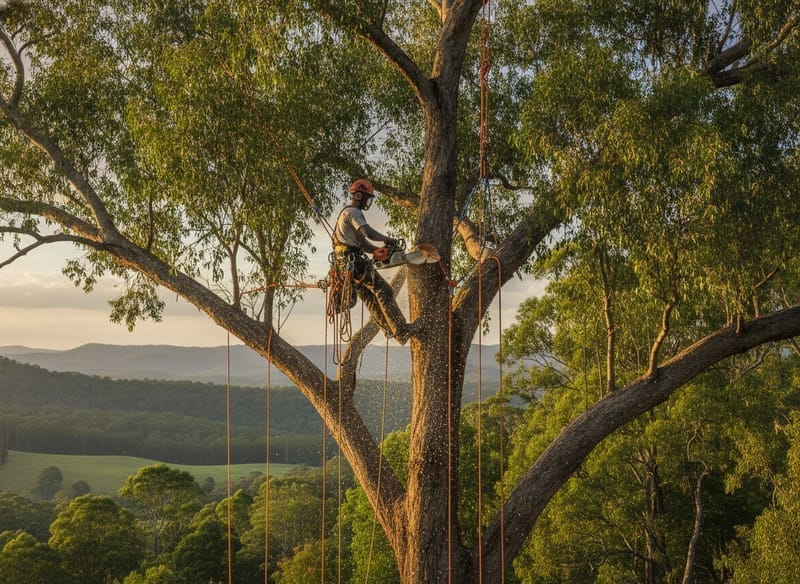
If a specific, heavy limb is over-extended and threatening a structure, we target that specific branch. Using rope-access climbing techniques, we safely dismantle the problematic limb piece by piece, dropping it safely even on tight, steep gullied blocks.
Removing dead, diseased, or broken branches from the canopy. In the wet forest climate of the Dandenongs, deadwood can rot quickly and fall unexpectedly. We safely remove these hazards before they snap.
Delivering safe and effective Tree Lopping Kalorama requires careful planning, especially given our local terrain. Here is exactly how our team manages the process from your first phone call to the final cleanup.
First, we conduct an on-site assessment. We visit your property to inspect the tree's health, species, and structural integrity. Because Kalorama blocks are notoriously steep with narrow, unkerbed access roads, we plan exactly how our climbers will access the tree and where our 12-inch chippers and tipper trucks can safely park.
Second, we check the council overlays. We determine if your proposed works require a permit under the Yarra Ranges Planning Scheme, such as the Significant Landscape Overlay (SLO) or the Erosion Management Overlay (EMO). If a permit is required, our AQF Level 5 consulting arborist can provide the necessary AS4970-compliant reports.
Third, the day of the job. Our AQF Level 3 climbing arborists access the canopy using advanced rope-access techniques, as cherry pickers are rarely viable on steep hinterland blocks. We perform the targeted pruning and reduction cuts, carefully rigging and lowering heavy timber to protect your garden, fences, and home below.
Finally, we process all green waste. Limbs are chipped on-site into valuable mulch, and larger logs are either removed in our tipper trucks or cut into firewood rounds for you to keep. We rake and blow down the site, leaving your property immaculate.
Operating in high-risk, steep terrain means safety is our absolute priority. All of our pruning and reduction work strictly adheres to AS4373 (Pruning of Amenity Trees), ensuring every cut promotes rapid healing and preserves tree health. Our team is highly qualified, with on-site climbers holding AQF Level 3 in Arboriculture and First Aid certifications. For planning and council permit requirements, we provide AQF Level 5 consulting arborist expertise. We are fully public liability insured and carry comprehensive WorkCover for all our staff. From traffic management on narrow mountain roads to complex rope-access rigging directly over houses, we have the tickets, training, and equipment to complete the job legally and safely.
Performing tree work in the Dandenongs isn't as simple as firing up a chainsaw. The Yarra Ranges Shire Council tightly regulates tree removal and lopping to protect the region's character and prevent landslips.
Almost all properties in Kalorama fall under the Significant Landscape Overlay (SLO). Under these schedules, you generally need a permit to remove, destroy, or lop any substantial tree (often defined as having a trunk circumference over 1.1 metres at 1.3 metres high, though newer residential schedules catch much smaller trees).
Furthermore, the Erosion Management Overlay (EMO) covers much of the landslip-prone land here. Careless lopping or removal can destabilise steep hillside soils. We also navigate the Bushfire Management Overlay (BMO), ensuring any pruning for asset protection or fuel reduction aligns with Clause 52.12 exemptions or approved bushfire management plans. We handle the paperwork, tree assessments, and compliance so your project stays strictly within local laws.
After we complete a professional canopy reduction or pruning job, your tree will need a little time to adjust to its new shape and foliage density. We recommend keeping the root zone well-watered during the drier summer months to help the tree recover and push out healthy, structural foliage rather than stress-induced epicormic shoots. Retain the woodchips we process on-site and spread them as mulch around the base of the tree (keeping them away from the immediate trunk collar) to retain moisture and improve soil health. We recommend having our team inspect large retained trees every 2 to 3 years, or following a severe winter storm, to check for new wind damage, hung-up branches, or structural shifts.
The cost of height reduction depends heavily on the tree species, size, and location on your property.
We'll provide a free assessment and explain the most cost-effective, safe option.
Providing smarter canopy management solutions across the region.
Contact our qualified arborists for professional height reduction and risk management.
Get a Free Assessment